There are 3 services that we offer to bring your floors back to life. We have listed them below in order of how damaged your floors are, starting from the least damaged option:
- Floor Rejuvenation aka Buff and Coat
- Floor Restoration aka Sand and Seal
- Floor Resurrection aka Relay, Sand and Seal
We also specialise in Deck Restorations.
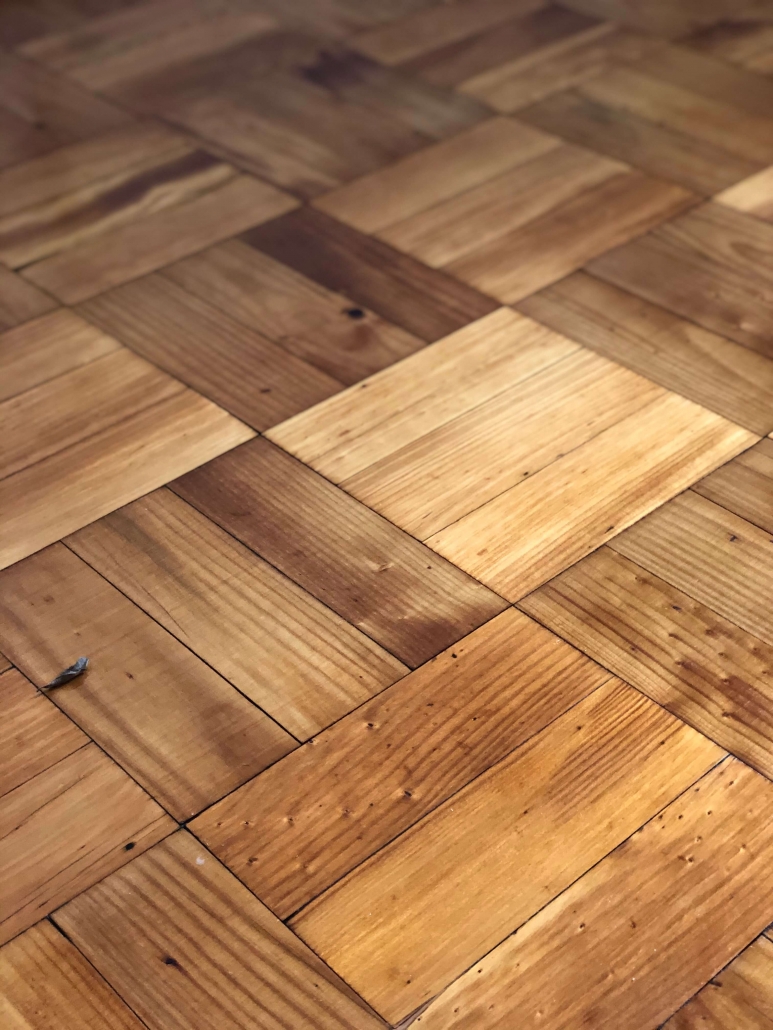
This is a remedial process that we use to fully restore parquet, or strip floors. A sand and seal is needed when the floors are very worn and the smooth appearance and texture has become flaky, waxy or gummy over time.
A wooden floor can be a stylish feature of any work or living space, whether you have a contemporary home or a period property, but even this most durable of materials will require some professional care from time to time.
Over time, wear and tear can cause damage that detracts from your floor’s natural beauty. If you’re noticing scuffs and scratches in your hardwood flooring, you may be concerned that it’s time to replace it. Fortunately, in many cases simply refinishing your floors will restore them to their former glory.
Is refinishing hardwood floors worth it?
Yes, it’s definitely worth refinishing hardwood floors instead of replacing them. Refinishing is cost-effective, it’s quicker, and it’s a lot easier because it requires less labor. A refinishing project takes less time and effort and, if done properly, can make old flooring look brand new.
How long do hardwood floors last?
On average, a hardwood flooring finish lasts approximately ten years. But with proper care and maintenance, it can last much longer.
Here are just a few of the benefits of having your hardwood floors professionally restored:
- A beautiful floor. Sanding can make even the oldest, flakiest floor look new again.
- It adds value to your home. Having your floors redone will instantly increase your homes market value.
- For safety. Sanding reduces the likelihood that floors will crack and splinters will develop. Meaning that children, pets, and family members can walk across the floor in socks or bare feet without risking injury.
- Strength. Sanding evens out the surface of the floor so it’s level. It also closes up any spaces between planks, tightens loose nails, and removes wood splits. This makes the entire floor more resistant to traffic and furniture weight.
- Cleanliness. Finished floors collect little dust. A quick sweep and a wet mop every once in a while is all that’s needed to keep your floor free from debris and looking its best.
- Pest control. Sanding eliminates small crevices and holes in the floor where termites and other insects like to burrow and breed.
What types of wood can this be done to?
This process can be employed on any type of solid wood or strip floor i.e. Teak, Beech, Pine, etc.
It cannot be used to restore laminate floors, or engineered floors.
When is this process necessary?
This is a remedial process that we use to fully restore parquet, or strip floors. A sand and seal is needed when the floors are very worn and the smooth appearance and texture has become flaky, waxy or gummy over time.
What does the process entail?
- We start with a rough sand, which removes all the old sealers, oils, grime and waxes that have accumulated over time and gets the floor down to the bare wood again.
- Next we do a medium sand, followed by a fine sand. These make sure that the floor is smooth and ready for the sealer to be applied.
- The next step is to apply 3 coats of sealer in either a satin, or gloss finish.
- The floors get a light sand after the first and second coats of sealer.
- This fully restores the floors and leaves them with a smooth and even finish.
Restore your hardwood floors today!
Get in touch with us for a complimentary, no obligation, quote today.
We look forward to working with you!


 https://www.darockflooring.co.za/wp-content/uploads/2021/06/tMyobQGw_edited.jpeg
780
1040
Roxanne
https://www.darockflooring.co.za/wp-content/uploads/2025/02/logo-woodsmiths-NEW-min-300x99.jpg
Roxanne2022-02-09 07:54:522022-07-21 08:36:34The Benefits of Hiring A Professional Floor Sander
https://www.darockflooring.co.za/wp-content/uploads/2021/06/tMyobQGw_edited.jpeg
780
1040
Roxanne
https://www.darockflooring.co.za/wp-content/uploads/2025/02/logo-woodsmiths-NEW-min-300x99.jpg
Roxanne2022-02-09 07:54:522022-07-21 08:36:34The Benefits of Hiring A Professional Floor Sander